Pharmaceutical Filling & Packaging Equipment
Explore equipment supporting pharmaceutical product filling, dispensing, packaging, material handling, and production automation.
The appropriate equipment configuration depends on dosage form, packaging requirements, production throughput, and the wider manufacturing process.
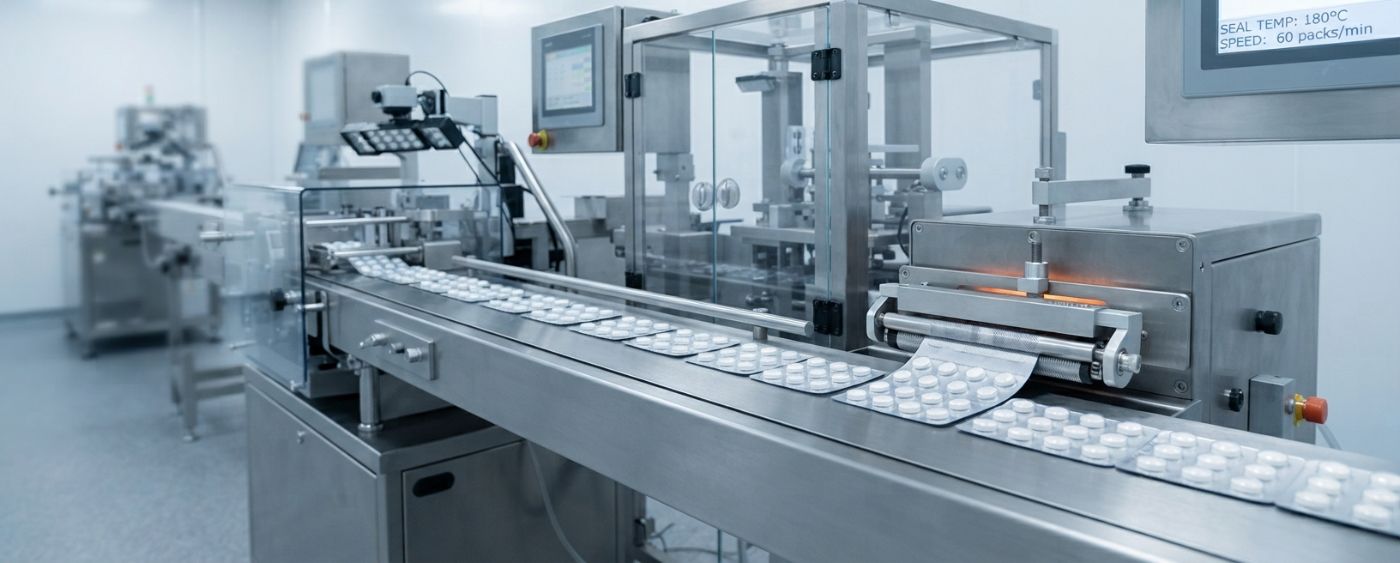
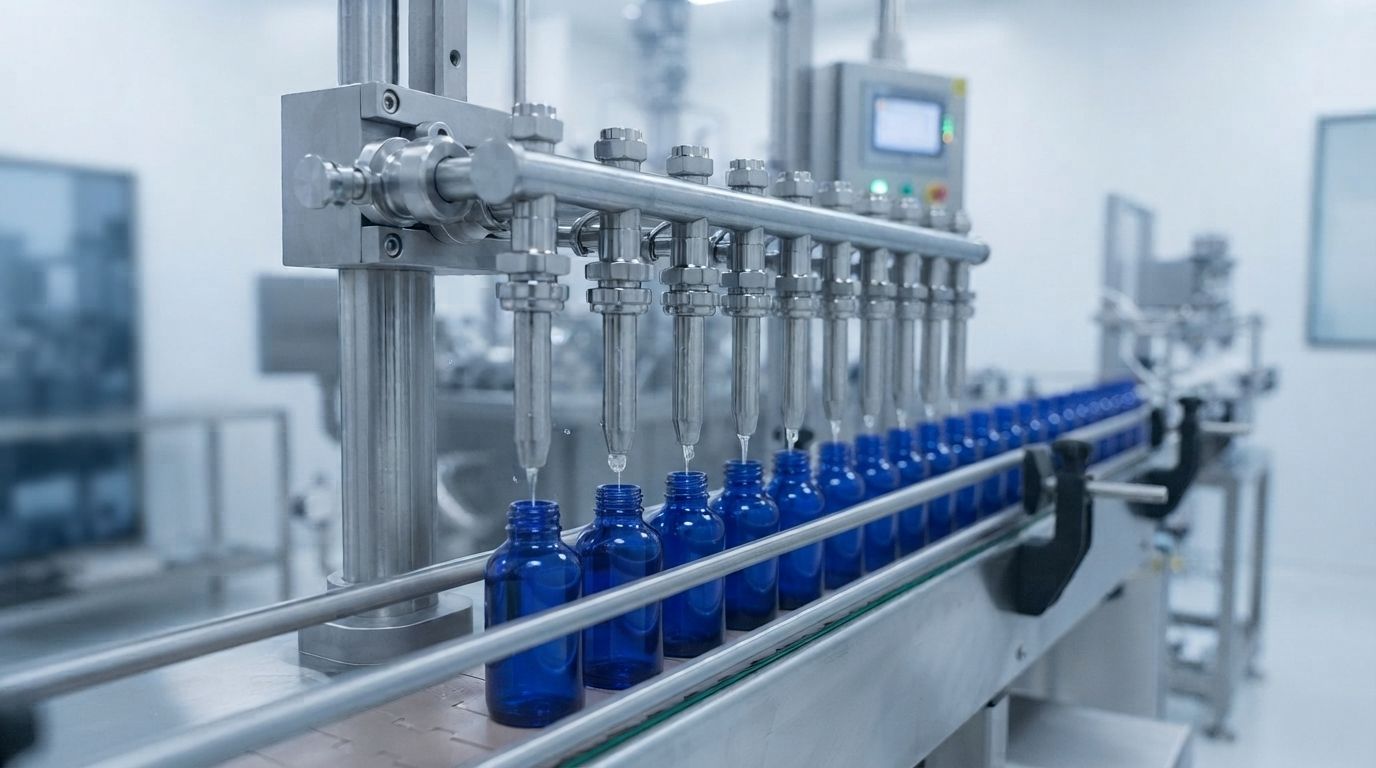
Filling & Dispensing Systems
Filling equipment delivers a measured quantity of product into its container. The choice depends on whether the product is a powder, liquid or semisolid, the fill volume and accuracy required, and the container format.
EQUIPMENT TYPES
- Liquid fillers
- Piston, peristaltic or gravity filling for solutions and suspensions.
- Semisolid fillers
- Tube and jar filling for creams, gels and ointments.
- Powder fillers
- Auger or volumetric dosing for powders and granules.
- Dispensing systems
- Controlled dispensing of measured quantities at the bench or on the line.
WHAT TO CONSIDER
- Product type and viscosity
- Fill volume and accuracy
- Container range
- Line speed
- Product changeover
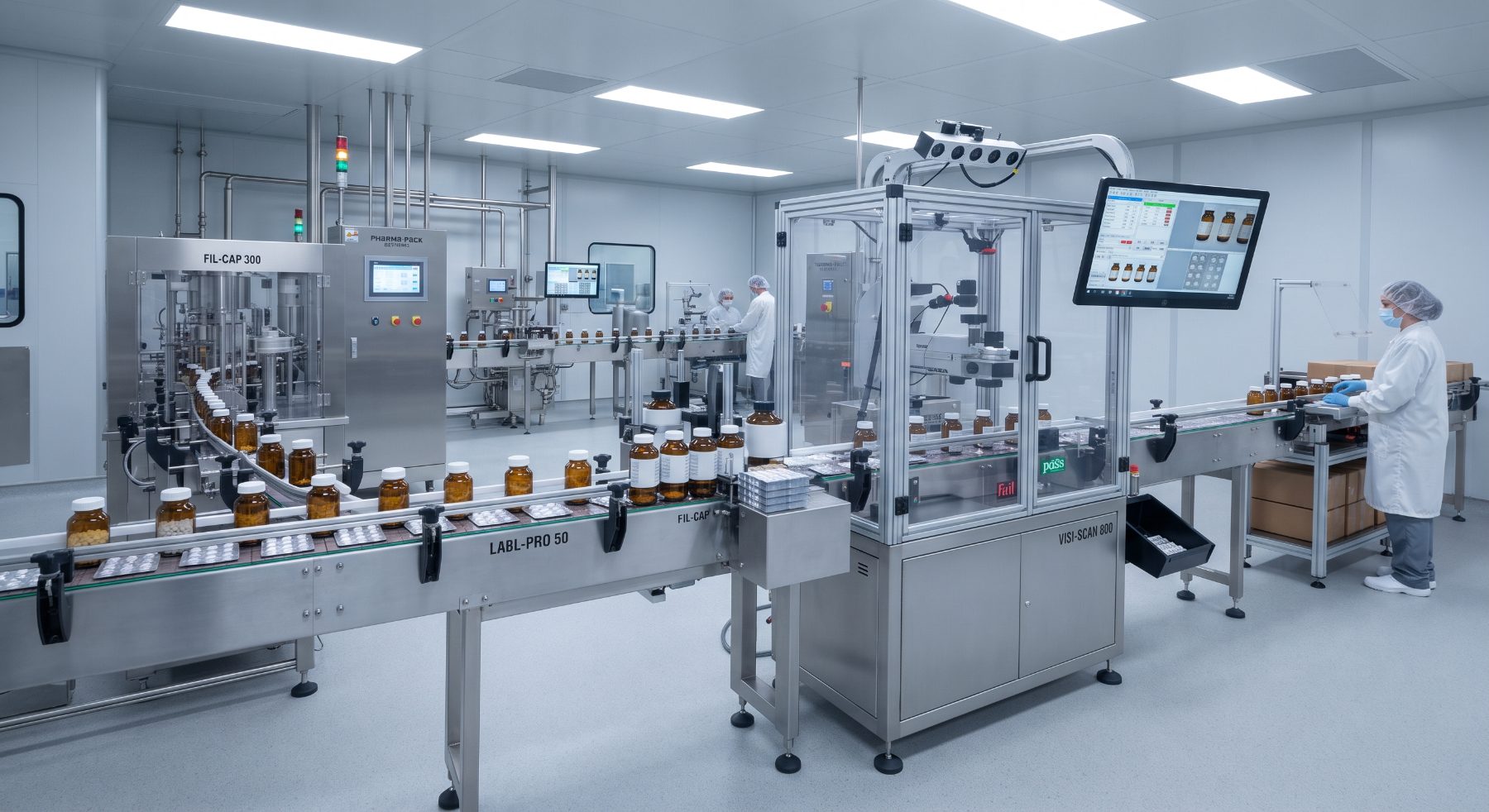
Pharmaceutical Packaging
Packaging protects the product, carries dose information and supports traceability. Systems are usually combined into a line that runs from primary pack to labeled secondary pack.
EQUIPMENT TYPES
- Bottle filling
- Tablet and capsule counters and bottle fillers for solid doses.
- Blister packaging
- Forming, filling and sealing of blister cards.
- Sealing
- Induction and heat sealing for bottles, tubes and pouches.
- Labeling
- Application of labels and variable printed information.
- Packaging inspection
- Vision and check systems that verify presence, print and seal.
WHAT TO CONSIDER
- Pack format
- Required output
- Label and print data
- Moisture and light protection
- Integration with upstream steps
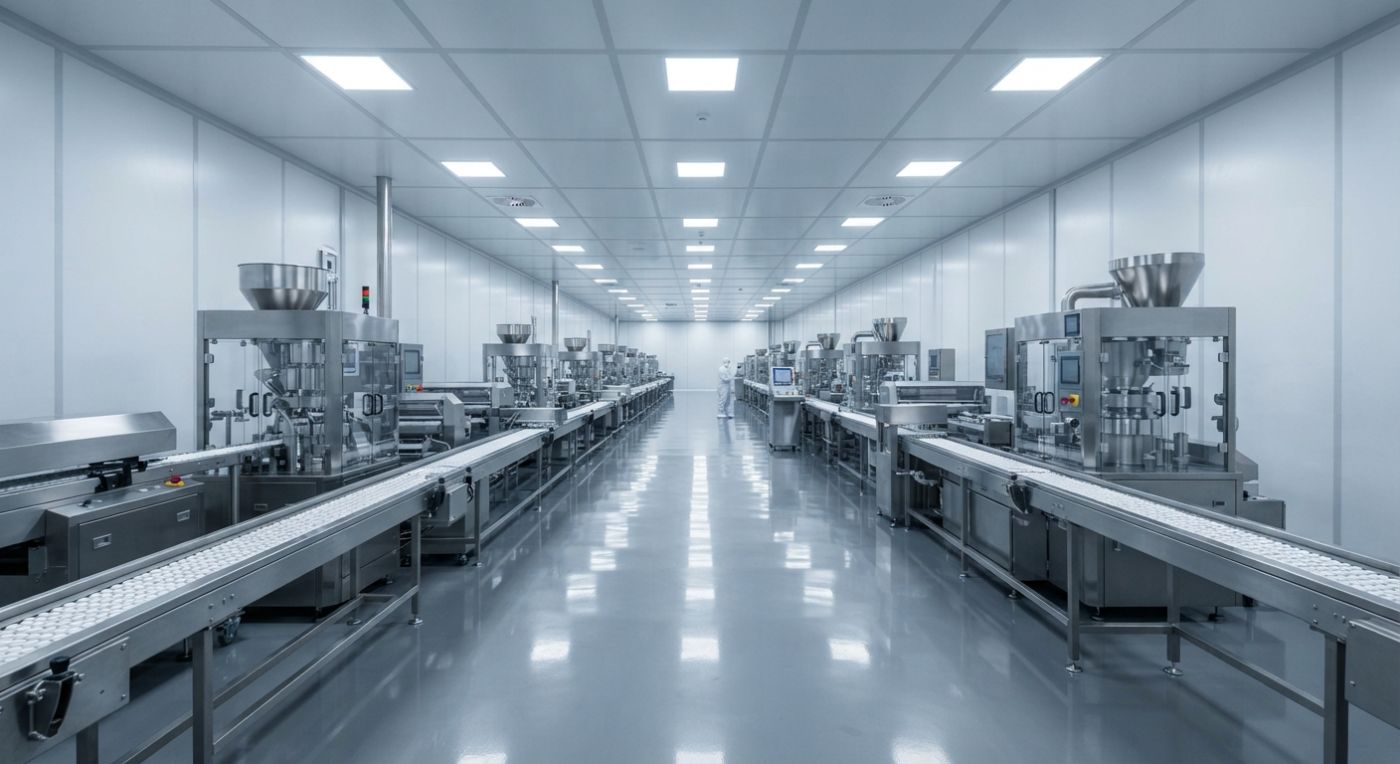
Pharmacy Production Automation
Automation is used where repeatable operations or manual handling limit consistency or throughput. It can be a single automated step or conveyors linking several machines.
EQUIPMENT TYPES
- Automated production systems
- Machines that count, fill or pack with minimal operator intervention.
- Conveyor integration
- Links that move product between process and packaging steps.
- Repeatable processing operations
- Programmed parameters that run the same way from batch to batch.
- Reduced manual handling
- Fewer touch points between steps, lowering handling errors and operator exposure.
WHAT TO CONSIDER
- Current bottlenecks
- Batch size and product variety
- Changeover frequency
- Space for conveyors
- Operator training
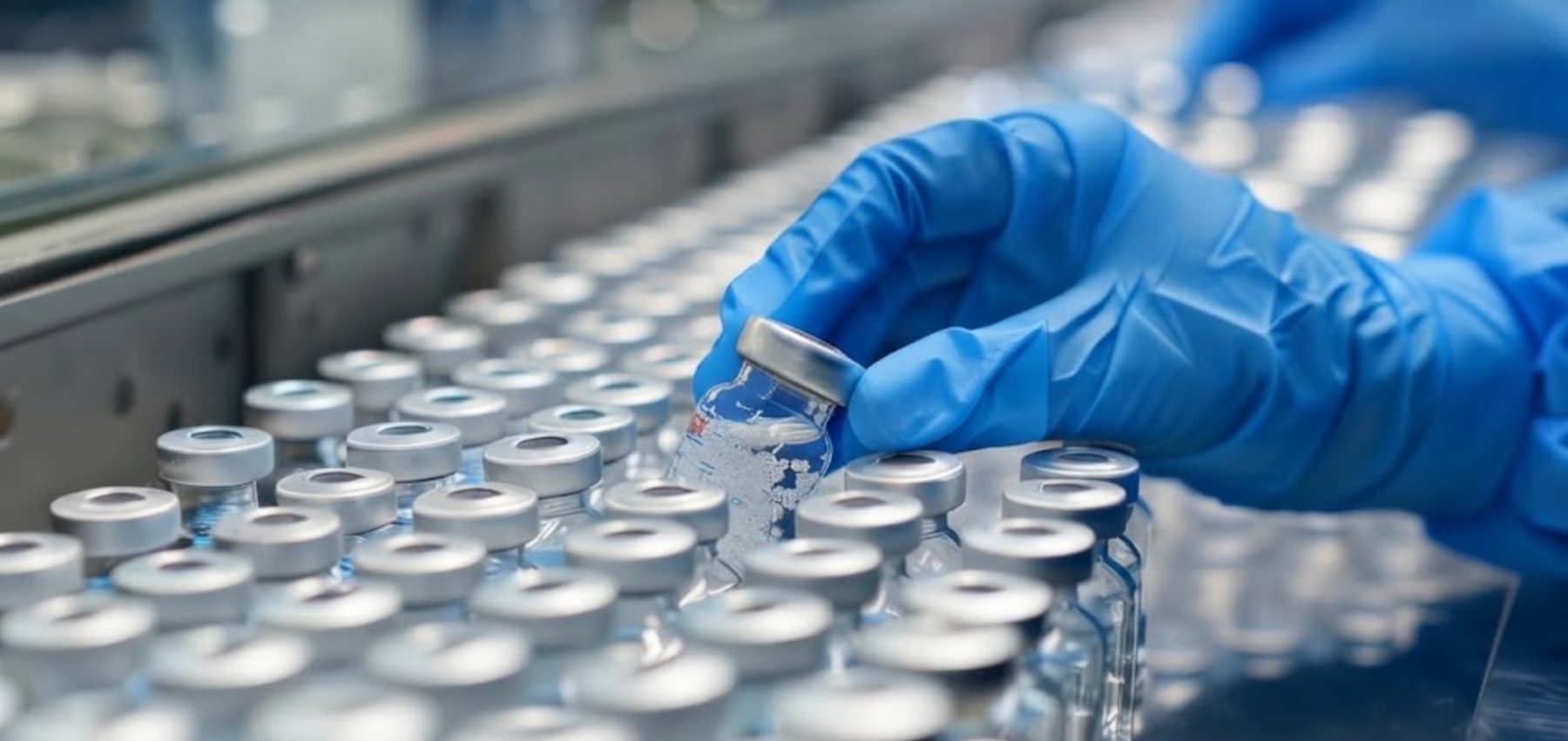
Material Handling
Moving materials between rooms, machines and storage affects efficiency, contamination control and operator safety. Handling equipment is chosen around the weight, form and cleanliness requirements of what is being moved.
EQUIPMENT TYPES
- Material transfer
- Containers, bins and conveying between process steps.
- Equipment loading
- Lifts and charging systems for blenders, hoppers and fillers.
- Product movement
- Carts and trolleys for in-process and finished goods.
- Production logistics
- Staging and storage that support an orderly material flow.
WHAT TO CONSIDER
- Container sizes and weights
- Lifting height
- Cleanability
- Route through the facility
- Material segregation
OTHER EQUIPMENT GROUPS
Equipment types listed are representative. Specific models, configurations and specifications are confirmed for each project.
Plan Your Filling and Packaging Line
Share the product, container format and output you need. We can help evaluate which filling and packaging steps the line should include.