Pharmaceutical Scale-Up Solutions
Scale your pharmaceutical production with confidence.
Moving from formulation development to larger-scale manufacturing requires more than increasing batch size.
Equipment capabilities, process behavior, material handling, and production controls must be considered together to support a repeatable manufacturing process.
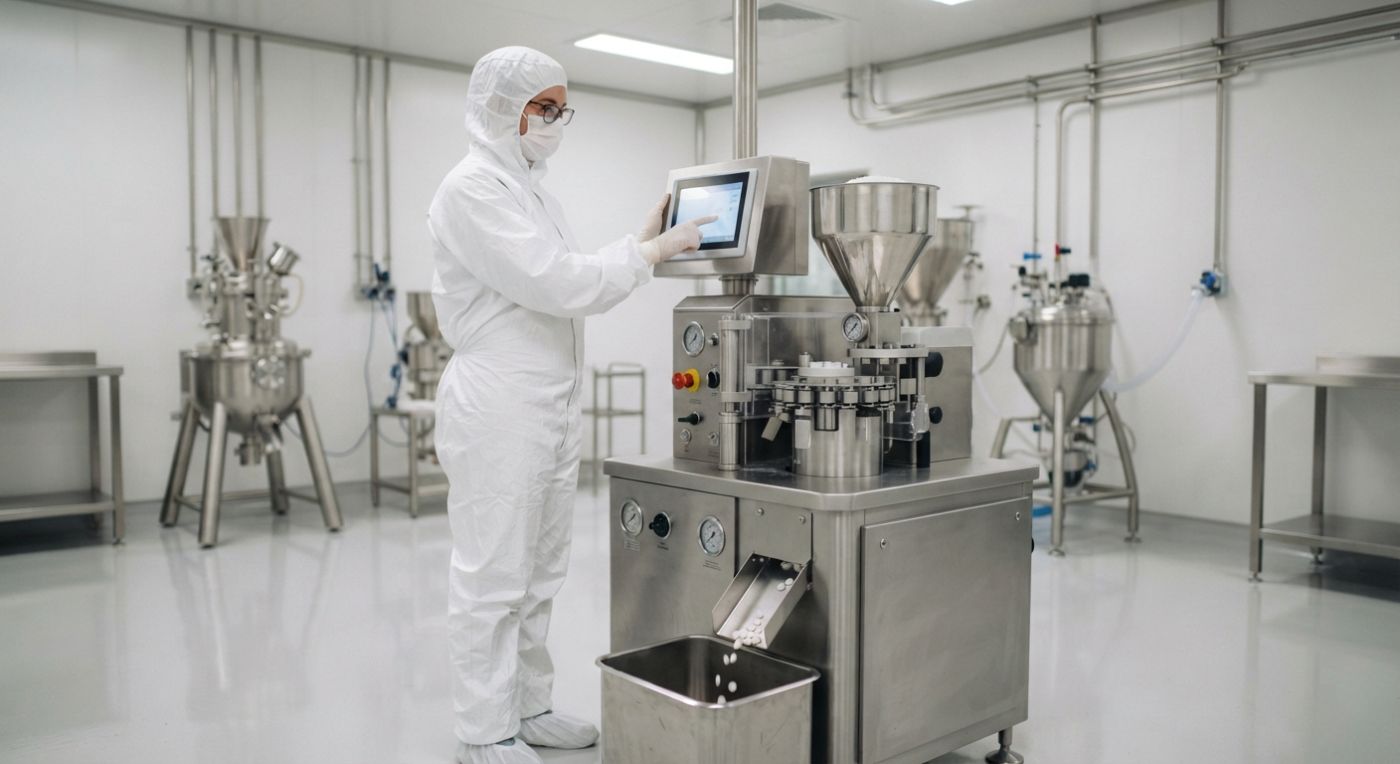
Three Stages of Scale-Up
Unit ranges are illustrative, carried over from typical project discussions. They are not universal equipment limits; actual capacity depends on the formulation, equipment and process.
-
01 ILLUSTRATIVE · 10–1,000 UNITS
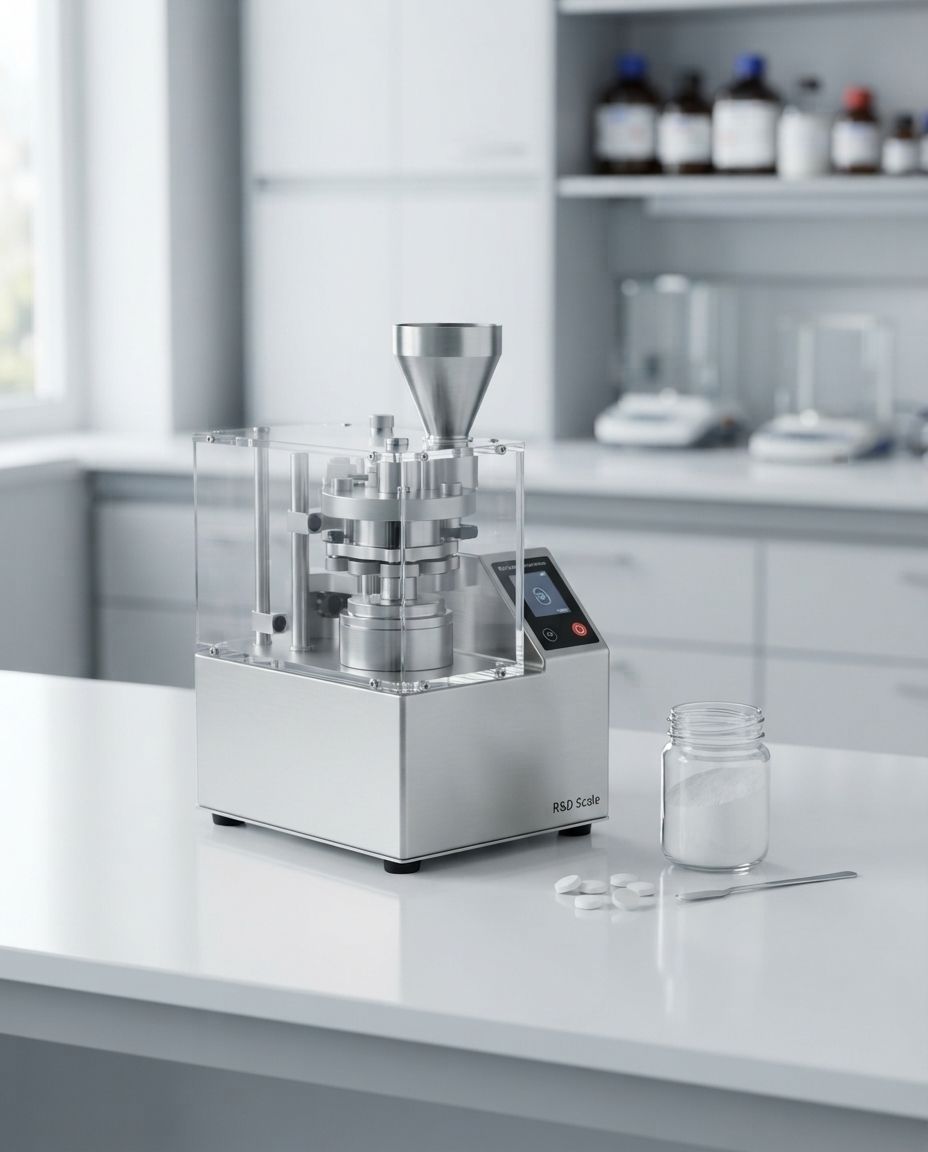
R&D Scale
Develop and evaluate formulations using compact equipment designed for flexibility and small-batch experimentation.
- Formulation screening and small trial batches
- Material characterisation before process design
- Benchtop equipment with fast changeover
-
02 ILLUSTRATIVE · 500–25,000 UNITS
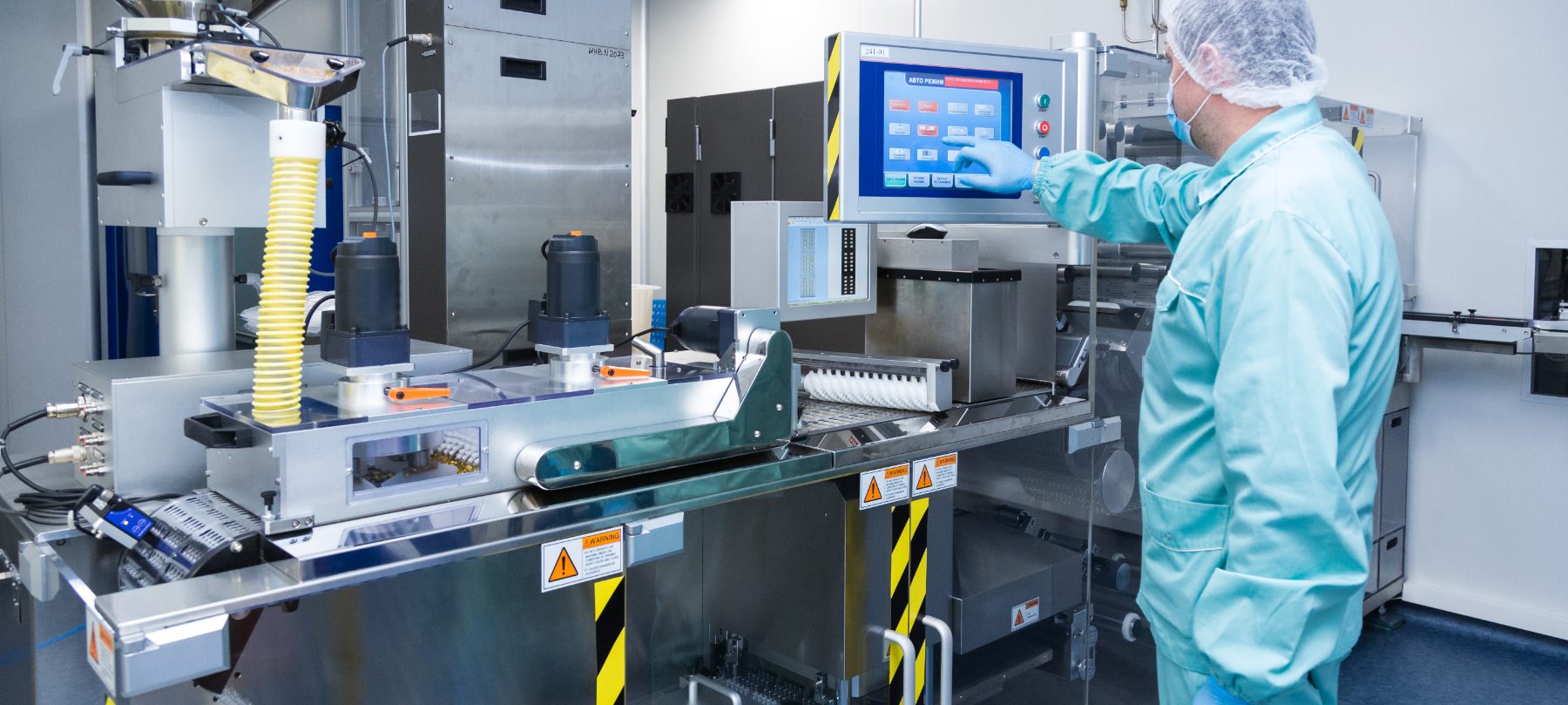
Pilot Scale
Translate laboratory processes into repeatable pilot operations while evaluating equipment performance and process requirements.
- Repeatability and process-parameter studies
- Equipment performance under realistic loads
- Groundwork for larger-scale equipment selection
-
03 HIGHER THROUGHPUT
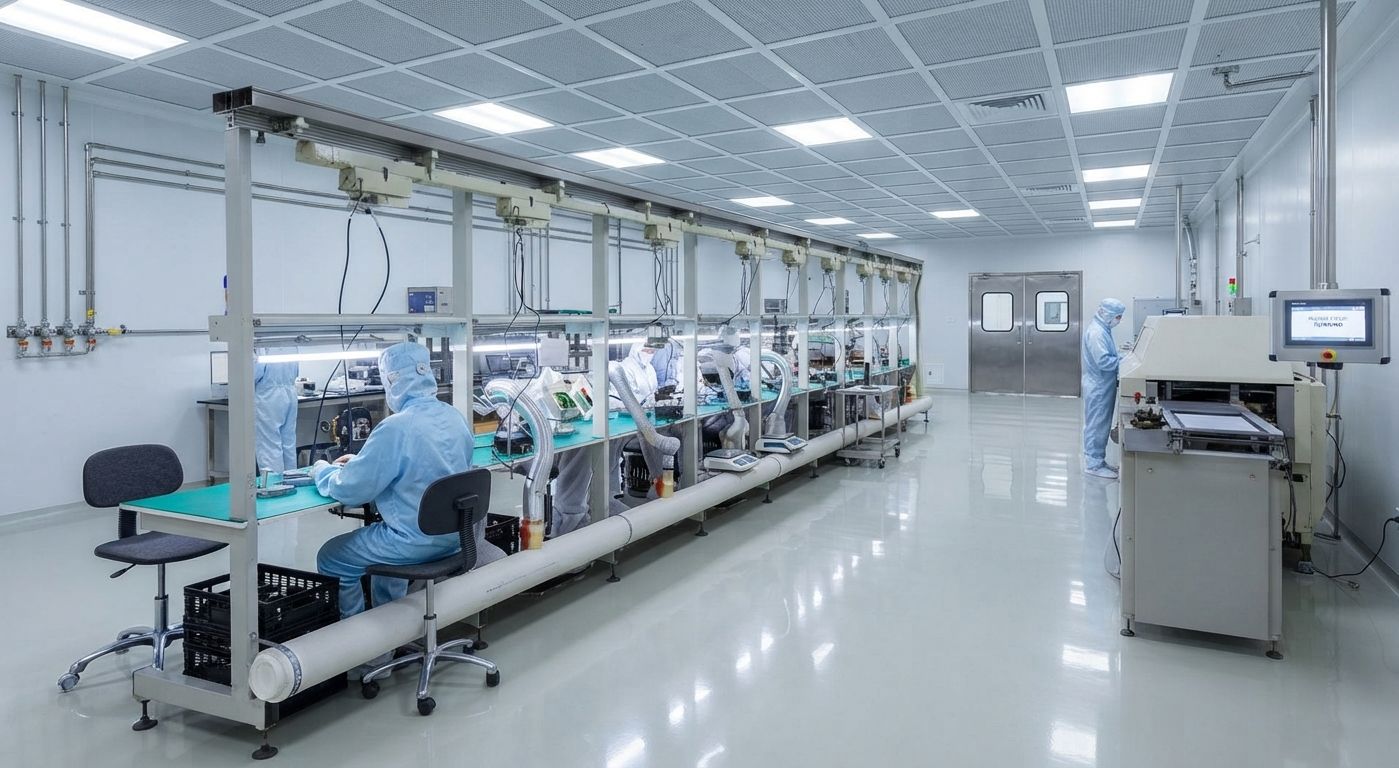
Production Scale
Plan for higher-throughput manufacturing with equipment and workflows suited to operational capacity and production goals.
- Integrated lines and material flow
- Capacity planning against production goals
- Cleaning, changeover and operator workflow
From Formulation to Production
Scale-up is a sequence of decisions. Each stage informs the equipment and process choices of the next.
-
01
Formulation and process evaluation
Review the formulation, its material properties and the processing route it implies before committing to equipment.
-
02
Equipment selection
Identify equipment types and configurations that suit the dosage form, batch size and development stage.
-
03
Pilot-scale development
Run the process at an intermediate scale to observe how materials and equipment behave beyond the bench.
-
04
Process optimization
Adjust parameters and equipment settings to improve consistency and repeatability.
-
05
Facility and workflow considerations
Consider footprint, material and personnel movement, cleaning access and utilities alongside the equipment.
-
06
Preparation for higher-throughput production
Plan the transition to larger equipment and integrated workflows based on what pilot work has shown.
Equipment Selection Considerations
Dosage form
Tablets, capsules, semisolids and liquids follow different process routes and need different equipment families.
Batch size
Current and projected batch sizes determine equipment capacity and whether a scale step is needed.
Material properties
Flow, compressibility, particle size, viscosity and moisture sensitivity shape processing choices.
Process requirements
Mixing intensity, temperature control, containment and dosing accuracy narrow the suitable options.
Facility constraints
Available space, utilities, room classification and access for cleaning limit what can be installed.
Quality requirements
In-process testing, documentation and applicable regulatory expectations influence equipment configuration.
Related Equipment
Scale-up decisions touch every equipment group, from the press or mixer itself to containment, packaging and testing.
Discuss Your Scale-Up Project
Tell us where your formulation is today and where production needs to go. We can help evaluate the equipment and process questions in between.